Overview
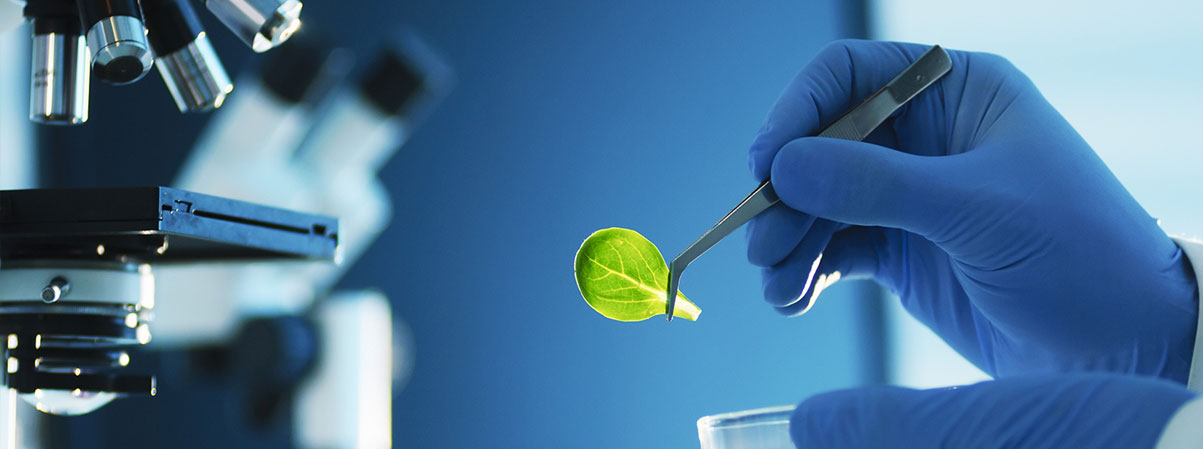
Glass and transparent plastics are principally used for optical applications and reflect about 8-12% of the visible light thereby decreasing transmission. Transparent plastics are being used extensively to replace glass in both industrial and domestic applications due to their low density and shock resistance. But transparent plastics are also easily prone to scratches and abrasion since they are soft in nature. Scratch resistant, anti reflective coatings (ARCs) can enhance their visible light transmission while maintaining excellent scratch resistance. From a technology point of view, single layer ARCs on glass and transparent plastics are viable for commercialization.
Key Features
- Visible light transmission ~ 97%
- Haze change after 1000 cycles of crockmeter testing using fabric: <2%
- Can be applied on Polycarbonate, PMMA and window glass
- Eco-friendly
- Low temperature ultraviolet (UV)/near-infrared (NIR) curability
- Amenability for deposition on large areas with automation
Potential Applications
- Smart windows
- Automobile windows
- Transparent glass for photovoltaic modules
- Protective glass cover for solar thermal heat collection elements
- Ophthalmic lenses
- Helmet visors
- Display glass for showcase
- Aircraft canopy
Status
- Performance and stability validated at laboratory scale on coupons
- Scale-up and prototype validation to be carried out
Intellectual Property Development Index (IPDI)
Level
1
2
3
4
5
6
7
8
9
10
Description
Basic concepts and understanding of underlying scientific principles
Shortlisting possible applications
Research to prove technical feasibility for targeted application
Coupon level testing in simulated conditions
Check repeatability/consistency
Prototype testing in real-life conditions
Check repeatability/consistency
Reassessing feasibility (IP, competition technology, commercial)
Initiate technology transfer
Support in stabilizing production
Status
| Level | 1 | 2 | 3 | 4 | 5 | 6 | 7 | 8 | 9 | 10 |
|---|---|---|---|---|---|---|---|---|---|---|
| Description | Basic concepts and understanding of underlying scientific principles | Shortlisting possible applications | Research to prove technical feasibility for targeted application | Coupon level testing in simulated conditions | Check repeatability/consistency | Prototype testing in real-life conditions | Check repeatability/consistency | Reassessing feasibility (IP, competition technology, commercial) | Initiate technology transfer | Support in stabilizing production |
| Status |
|
|
|
|
|
For more details on Intellectual Property Development Indices, Click here
- An improved composition for antireflective coating with improved mechanical properties and a process of coating the same, Indian patent application number 2330/DEL/ 2013 dtd 05-08-13.
- S. Pavithra and R. Subasri, Sol-gel derived single layer zeolite-MgF2 composite antireflective coatings with improved mechanical properties on polycarbonate, Journal of Coating Science and Technology 1 (2014) 8-16.