

Overview
Cold gas dynamic spray (also called Cold Spray or Kinetic Spray) involves accelerating micron sized powder particles to supersonic velocities resulting in the formation of dense, thick and pure coatings with high deposition rates. Cold spray is a low temperature high velocity variant of thermal spray family. This technique has very high deposition rates and deposition efficiencies. Since there is no heating of powders, retention of powder properties in the coating is possible. Dense coatings with porosity less than 0.1% can be achieved. Metallic, Alloy, Composites, Nanostructured and Amorphous powders can be deposited. This technology has huge potential for repair and refurbishment, electrical and thermal applications.
Key Features
- Indigenously developed state of the art PLC based automated Portable control panel (Max Pressure – 20 bar)
- Different set of nozzles
- For Low melting materials (polymer based)
- High deposition rate or coverage area
- Low deposition rate or coverage area
- For Ni based materials, Steels (Optional)
- Compressed AIR as process and carrier gas
- Maximum Pressure - 20 bar; Maximum Temperature - 900oC
- Cu, Al, Ag, Zn, Sn, Ni, SS, Ta, Nb, Ti and alloys and composites
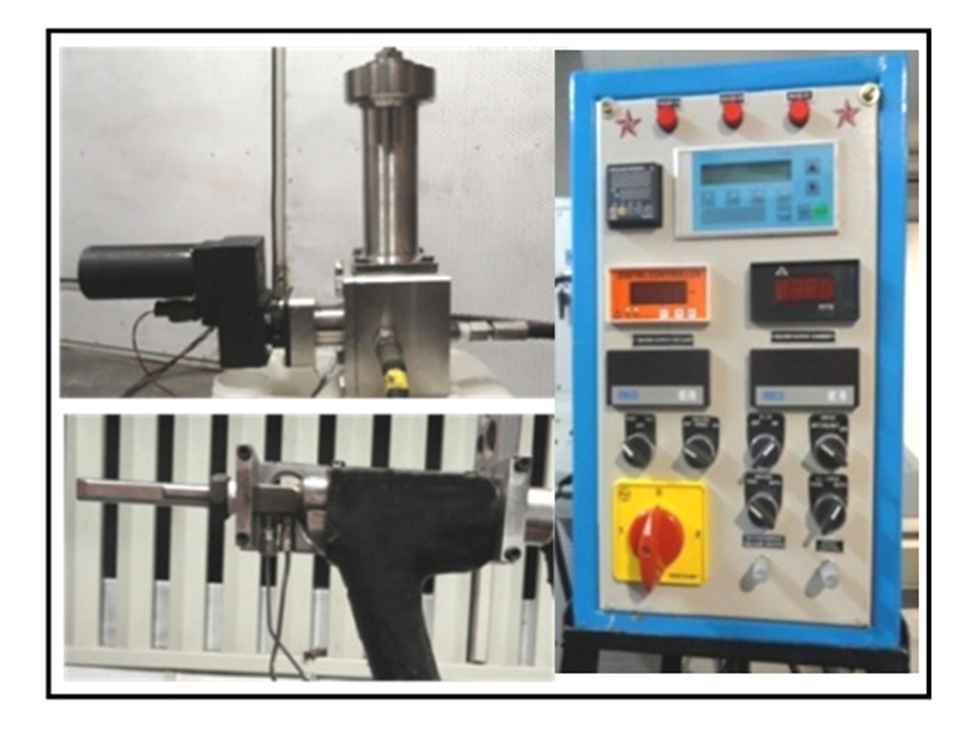
Portable Cold Spray Technology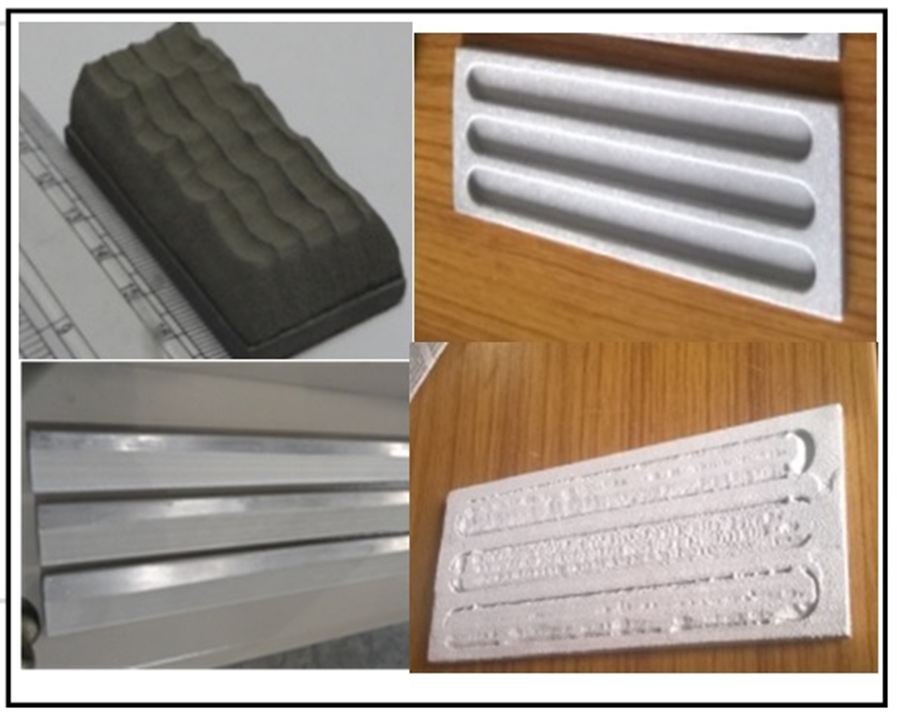
Typical Applications Developed
Potential Applications
- Repair and Refurbishment Applications (Aerospace components mainly structural Fan casing etc.,)
- Coatings for Electrical contacts, lugs, EMI shielding, heat sinks
- Coatings for High Temp Corrosion resistance, Bio medical, Sputter Target
- Sacrificial coatings or Cathodic Protection (Zinc coating on Steel Structures)
- Anodic Protection coatings (Aluminium coatings on Active Magnesium aerospace and automotive components)
- Wear resistant coatings (MMCs, Alloy coatings)
- Nanostructured / amorphous/ BMG coatings
- High Entropy Alloy Coatings as Bond coats for High Temperature Gas Turbine Applications
Status
- Technology Ready for transfer (academic version)
- Technology ready for demonstration (Industry)
- Application development activities in progress
Intellectual Property Development Index (IPDI)
Level
1
2
3
4
5
6
7
8
9
10
Description
Basic concepts and understanding of underlying scientific principles
Shortlisting possible applications
Research to prove technical feasibility for targeted application
Coupon level testing in simulated conditions
Check repeatability/consistency
Prototype testing in real-life conditions
Check repeatability/consistency
Reassessing feasibility (IP, competition technology, commercial)
Initiate technology transfer
Support in stabilizing production
Status
| Level | 1 | 2 | 3 | 4 | 5 | 6 | 7 | 8 | 9 | 10 |
|---|---|---|---|---|---|---|---|---|---|---|
| Description | Basic concepts and understanding of underlying scientific principles | Shortlisting possible applications | Research to prove technical feasibility for targeted application | Coupon level testing in simulated conditions | Check repeatability/consistency | Prototype testing in real-life conditions | Check repeatability/consistency | Reassessing feasibility (IP, competition technology, commercial) | Initiate technology transfer | Support in stabilizing production |
| Status |
|
|
|
|
|
|
|
|
For more details on Intellectual Property Development Indices, Click here
- Naveen M Chavan, SP Phani, M Ramakrishna, DS Rao and G Sundararajan, Surface & Coatings Technology 205 (2011), P4798–4807
- G Sundararajan, Naveen M Chavan and S Kumar, Journal of Thermal Spray Technology, 1348—Volume 22(8) December 2013
- S Kumar, A. Jyothirmayi, Nitin Washekar and SV Joshi, Surface and Coatings Technology, 296(2016), 124-135.